The Beacon Webzine
  • Home
  • Between the Lines
  • Bookshelf
  • Literary Trails
  • Personal Notes
  • Visual Spaces
  • That’s Life!!
  • About Us

Islamic Culture/Muslim Cultures: Coping with Uniformity & Variety

December 12, 2020 Anwar Moazzam 0

Between the Lines

Anwar Moazzam invokes a theoretical framework to address the duality expressed in Islam’s universal ethical values and the forms these values take in different cultural zones of the world.…[Read More]…

Print Friendly, PDF & Email

Ethical Living, Not Religion: The Buddha’s Solution to Existentialist Crisis

December 12, 2020 K.P .Shankaran 1

Between the Lines

In the history of humanity, the Buddha will likely stand out, as perhaps, the only thinker who found a non-religious solution for the human existential angst in ethical practices avers K.P. Shankaran…[Read More]…

Print Friendly, PDF & Email

Whatever Happened to the Hindu left?

December 12, 2020 Ruth Vanita 0

Between the Lines

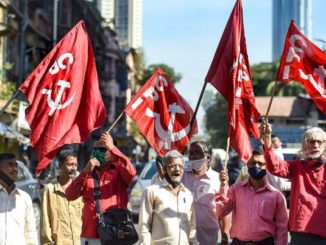
Almost two decades ago, Ruth Vanita looked around for a ‘Hindu left’ as a foil to the Hindu Right. She did not find it; its absence led to questions that are relevant even more so today and need to be discussed.…[Read More]…

Print Friendly, PDF & Email

Whatever happened to the Left? A Response to Ruth Vanita

December 12, 2020 Ashoak Upadhayay 1

Between the Lines

In response to the issues raised by Ruth Vanita about the absence of a Hindu left, Ashoak Upadhyay asks if the question should not be reframed: Whatever made the Left dismiss Hinduism as an impediment to modernity? …[Read More]…

Print Friendly, PDF & Email

The Visiting Card

November 30, 2020 Dalpat Chauhan 1

Literary Trails

Meena a dalit student who has realised her ambition to become a doctor in the face of bullying teachers is still afflicted with self-doubts.. By Dalpat Chauhan translated by Hemang Ashwinkumar…[Read More]…

Print Friendly, PDF & Email

Miraji redoes e.e. cummings

November 30, 2020 Geeta Patel 0

Literary Trails

Among the poets that Miraji (1912-1949) translated with his freewheeling style and rhythms was e.e. cummings. Geeta Patel translates the Urdu modernist’s reading and offers a glimpse into his poetic visions…[Read More]…

Print Friendly, PDF & Email

My Tabletop Body and Other Poems

November 30, 2020 Vidhya Sreenivasan 1

Literary Trails

To Vidhya Sreenivasan poetry is a choreographed expression of the collective of memory, wishes, questions-anything that is born out of the conversations we have with the world around us.”…[Read More]…

Print Friendly, PDF & Email

A Monumental African Tale that Keeps Wagging

November 20, 2020 Ashwin Desai 0

Personal Notes

Ashwin Desai offers up a slice of history of indentured Indians yearning to return to their home-South Africa, a century ago and riffs on what it means for their descendants in post-apartheid South Africa. …[Read More]…

Print Friendly, PDF & Email

The Self As Stranger

November 20, 2020 Nirmal Verma 0

Personal Notes

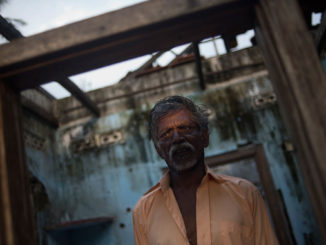
How to explain the spiritual homelessness of the rooted, of one who has never left his home? Nirmal Verma on the consequent ‘loss of self’ and the place of literature in describing it. Translated by Alok Bhalla.…[Read More]…
Print Friendly, PDF & Email

Musical Humanism: Across the World In the World

November 20, 2020 The Beacon 0

Visual Spaces

Music from around the world that celebrates difference in musical expressions and the poetry of humankind against hate. …[Read More]…
Print Friendly, PDF & Email

Gandhi’s Philosophical Way of Life: Some Key Themes

November 5, 2020 K.P .Shankaran 0

Between the Lines

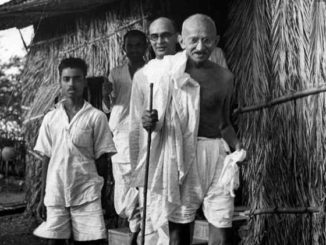
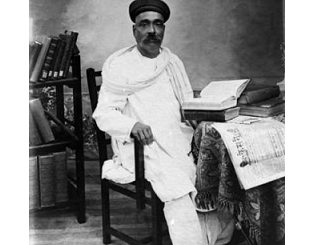
Like it was for the ancient philosophers in India, China and Greece, philosophy for Gandhi was a way of life not just the construction of theories, says K.P. Shankaran …[Read More]…
Print Friendly, PDF & Email

The Intrigue of Teaching-Learning During Lockdown

November 5, 2020 Dev Nath Pathak 1

That’s Life!!!

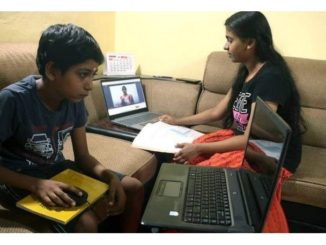
The idea of a ‘new normal’ has been rife during the lockdown but one is puzzled about the newness of the normal. A question haunts us and Dev Nath Pathak asks it: what is normal about the so called new?…[Read More]…
Print Friendly, PDF & Email

Pre-Pandemic Social isolation: Automated Lives

November 5, 2020 Ashoak Upadhayay 0

That’s Life!!!

The pandemic has not socially distanced us; social media had already started our self- isolation and it will do so even more in this age of the emoji says Ashoak Upadhyay in this fourth part of the Lives We Lead series.…[Read More]…
Print Friendly, PDF & Email

“Victory Colony, 1950”: An Excerpt

November 5, 2020 Bhaswati Ghosh 0

Bookshelf

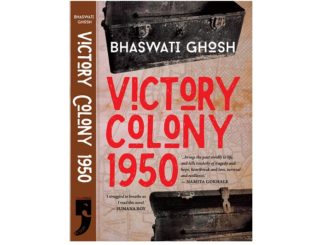
An excerpt from her debut novel in which Bhaswati Ghosh chronicles how Partition’s victims, unwanted on either side of the border built their lives and shaped the socio-cultural landscape of Calcutta. …[Read More]…

Print Friendly, PDF & Email

Prayag and Clockwork

October 24, 2020 Hemang Ashwinkumar 0

Literary Trails

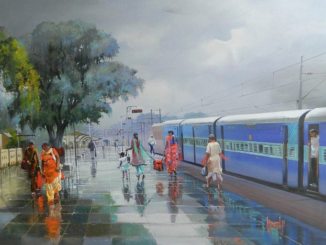
At a station on board a superfast to Prayag, great but illusory expectations. Two poems by Hemang Ashwinkumar…[Read More]…
Print Friendly, PDF & Email

“Mohenjo-Daro” and other Poems

October 24, 2020 Mukhtar Siddiqui 0

Literary Trails

Poet translator and dramatist Mukhtar Siddiqui (1919-1972) shaped modern Urdu literature with innovative lyrical content evident in these poems translated by poet Riyaz Latif…[Read More]…

Print Friendly, PDF & Email

Fishy Tales (Tails?)

October 24, 2020 A.J. Thomas 8

Literary Trails

Poet and translator A.J. Thomas meditates on the delights of fish eating and wonders about sardines in Sardinia …[Read More]…
Print Friendly, PDF & Email

The Poetry of Dara Shikoh

October 24, 2020 Shamsur Rahman Faruqi 0

Literary Trails

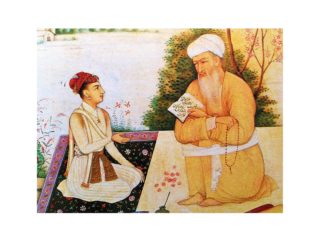
The aura of victimhood and romance around Dara Shikoh’s last days and death has obscured his command of Vedanta, Sufism and Philosophy. He was besides, a serious Persian poet avers Shamsur Rahman Faruqi…[Read More]…
Print Friendly, PDF & Email

Gandhi: In These Demonic Times, Setting the Clock to another Noonday

October 11, 2020 A K Saran 0

Between the Lines

Gandhi may have failed but does not the Gandhian idea of a threefold revolution for sanity against “dark and demonic” forces still count, asked A.K. Saran fifty years ago. His question is still relevant …[Read More]…
Print Friendly, PDF & Email

Vaishnavajana to: Notes on Gandhi, Bhakti, and Narsi Mehta

October 11, 2020 Vinay Lal 0

Between the Lines

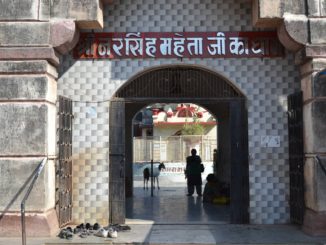
Gandhi is the last representative of the sant traditions of India. Vinay Lal explores this proposition particularly with reference to his unequivocal admiration for the bhajan, “Vaishnavajana to” (“Call Only That One a Vaishnava”) …[Read More]…
Print Friendly, PDF & Email

Gandhi’s Ahimsa: Antidote to Ubiquity of Violence

October 11, 2020 Dilip Simeon 0

Personal Notes

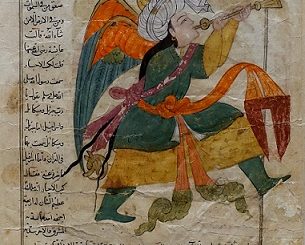
Violence is so routinized as to have become a banal spectacle denuding what’s left of our humanity. But there’s hope, feels Dilip Simeon in Gandhi’s message of Ahimsa as Truth.
…[Read More]…
Print Friendly, PDF & Email

“Father on Earth” and other Poems

September 26, 2020 Robin Ngangom 0

Literary Trails

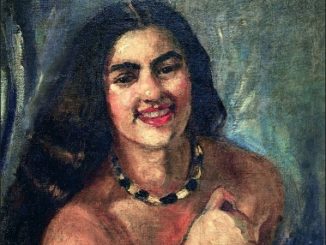
His poetry interiorises suffering and outrage such that the public /private binary dissolves in his visions of abandoned love and injustices across space and time. Here’s Robin S. Ngangom
…[Read More]…
Print Friendly, PDF & Email

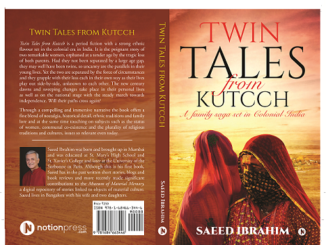
“Twin Tales From Kutcch”: An extract

September 26, 2020 Saeed Ibrahim 0

Bookshelf

In this extract from his family saga, Saeed Ibrahim chronicles a tragedy foretold with brushstrokes that trace a life of routine grounded in communal harmony and tradition. …[Read More]…

Print Friendly, PDF & Email

Hindi Cinema’s Nehruvian Tryst: 2.Age of Vanishing Illusions

September 26, 2020 Darius Cooper 0

Visual Spaces

In this concluding part of his journey through Hindi cinema’s Nehruvian tryst, Darius Cooper finds an era of vanishing illusions, nostalgia and incipient despair
…[Read More]…

Print Friendly, PDF & Email

GDP: Blind Metric As Gilded Cage

September 16, 2020 Ashoak Upadhayay 0

That’s Life!!!

Preoccupation with this blind metric’s fall as the barometer of well-being hides the reality of a deliberate pauperization that began much earlier and has gathered speed says Ashoak Upadhyay…[Read More]…

Print Friendly, PDF & Email

Hindi Cinema’s Nehruvian Tryst:
I. Age of Tangled Optimism

September 13, 2020 Darius Cooper 0

Visual Spaces

In this first part of his journey across Hindi cinema in post-Independent India till 1958, Darius Cooper sees Hindi films made with Nehru’s spirit of an “adaptable Occidentalism.” …[Read More]…

Print Friendly, PDF & Email

An Epistolary Review of S. R. Faruqi’s Novel

September 16, 2020 Asif Raza 0

Literary Trails

Asif Raza reviews Shamsur Rahman Faruqi’s novel ‘Kai Chaand Thay Sare Aasmaan` (The Mirror of Beauty) over ten months of immersive and reflective readings in this riveting dialogue with the author.…[Read More]…

Print Friendly, PDF & Email

Lokmanya Tilak: Pragmatic Politician or Diehard Ideologue?

September 3, 2020 Mayank Bhatt 0

Between the Lines

Lokmanya Tilak’s death centenary (August 01) and the end of the annual celebratory Ganesh Chaturthi procession he launched prompts Mayank Bhatt to re-visit that leader’s shifting stances and his role as ‘nationalist’ leader. …[Read More]…

Print Friendly, PDF & Email

In Transit

September 5, 2020 Sukrita Paul Kumar 0

Literary Trails

Poet, painter and literary critic Sukrita Paul Kumar draws on her experience of working with the homeless street children and natural-disaster victims to search for meaning in poetry and painting …[Read More]…

Print Friendly, PDF & Email

Delhi, The First Time I saw You!

September 5, 2020 A.J. Thomas 3

Literary Trails

Poet A. J. Thomas turns his gaze to the city he didn’t want to love, did when he was away from it even though “It’s at once like an ocean that throws up/ Everything it takes in, and like a volcano/ That consumes anything thrown in” …[Read More]…

Print Friendly, PDF & Email

Ways of (not) Seeing: Cricket and its Discontents

September 5, 2020 Ashwin Desai 0

Personal Notes

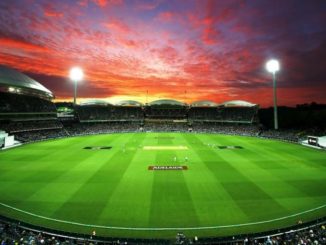
Ashwin Desai sees the problems plaguing South African cricket–race, class privilege, ‘head counts’ and quotas—as symptoms of a deeper malaise, of racial chauvinism making a comeback.
…[Read More]…

Print Friendly, PDF & Email

In a Pandemic an Outbreak of Generosity: At Home, in the World

August 24, 2020 The Beacon 0

That’s Life!!!

In stark contrast to the ruthlessness of capitalism and states exploiting the pandemic for the accumulation of profit and power ordinary people especially the young are defining the borderless world of caring: two pages from an unfolding saga. …[Read More]…

Print Friendly, PDF & Email

On Quiet Nights, With the Stars Above

August 24, 2020 The Beacon 0

Literary Trails

Gazing at the stars, Iraq War veteran,memoirist and poet Brian Turner ‘reads’ love, Time, silence and solitude in their fleeting fiery train of light. …[Read More]…

Print Friendly, PDF & Email

No Tomorrow

August 24, 2020 The Beacon 2

Literary Trails

A short fiction by Shinjini Kumar of a chance encounter on a bus unfolds a tale of love with happy beginnings and ambiguous endings in evasive memories. …[Read More]…

Print Friendly, PDF & Email

The Ram Mandir Will Not Change India, the Coronavirus Might

August 15, 2020 The Beacon 1

Between the Lines

Stepping back from the drum beating of the Ram Mandir at Ayodhya as history-in-the-making (for better or worse), Aditya Sudarshan peers into the cracks between the dichotomies defining national discourse for an alternative reading.…[Read More]…

Print Friendly, PDF & Email

Thinking Nationalism: Beneath Tagore’s Ambiguities, Visions of Humanity

August 15, 2020 The Beacon 0

Between the Lines

With midnight’s broken toll clanging in our ears, time we revisited ‘national’ poet to get a handle on our stifling visions of nationhood. Mohammad A. Quayum digs into Tagore’s ambiguities and finds a clear message of love for humanity above all else. …[Read More]…

Print Friendly, PDF & Email

Reading the Present in Tagore’s “Home and the World”

August 15, 2020 The Beacon 1

Bookshelf

Tagore’s Gharey, Bairey was written over a century ago but the issues that propel the narrative and define the characters remain as relevant today as back then. Pankaj Dutt scans some of them.…[Read More]…

Print Friendly, PDF & Email

Genealogies of Silence in Noon Meem Rashid’s Israfil’s Death

August 5, 2020 The Beacon 0

Literary Trails

In his lyrical elucidation of the archangel Israfil’s death, Noon Meem Rashid issues an elegiac imperative—weep tears for the death of the bearer of all sounds, for the silence that relegates all into nothingness.…[Read More]…

Print Friendly, PDF & Email

COINS FROM AMRITA

August 6, 2020 The Beacon 1

Literary Trails

Hungarian poet musician and writer Gábor Lanczkor dwells in verse on what it means to be between two cultures for an artist in these poetic vignettes about the life of painter Amrita Sher-Gil mirrored through different voices…[Read More]…

Print Friendly, PDF & Email

Why Are We Here and Not There?

August 5, 2020 The Beacon 0

Between the Lines

More than a hundred defense services veterans issue a statement critiquing their greater deployment in policing domestic streets rather than in protecting the nation’s borders.…[Read More]…

Print Friendly, PDF & Email

As If He Wanders Out of Rembrandt’s Painting for a Promenade

August 5, 2020 The Beacon 0

Personal Notes

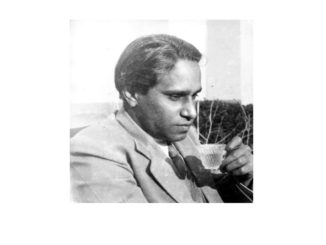
Gujarati poet Yagnesh Dave recalls meeting with the late Varis Alvi at his home and an epiphanous moment when his host puts him in mind of a Rembrandt figure.…[Read More]…

Print Friendly, PDF & Email

Conflict and Existentialist Angst in Ahilan’s Then There Were No Witnesses

July 21, 2020 The Beacon 0

Bookshelf

A southern Sinhala polity keen to ease its collective conscience may embrace institutionally sanctioned silence says Harshana Rambukwella but Ahilan’s poetic visions seek remembrance.…[Read More]…

Print Friendly, PDF & Email

Visions of a Journey: “Bengal in My Blood”

July 21, 2020 The Beacon 5

Literary Trails

Born in Kerala, poet and translator A.J. Thomas evokes a bond with the heart of Bengal in this poetic memoir, fusing the personal and the physical, seeking amidst its squalor and hopelessness “a familiar wag of humanity’s tail”.…[Read More]…

Print Friendly, PDF & Email

When Cricket’s not Cricket: When Shame’s in Short Supply

July 21, 2020 The Beacon 0

That’s Life!!!

In this vivid recall of game-fixing by South Africa cricketers in the mid-1990s and some of whom now oppose support for Black Lives Matter, Ashwin Desai glimpses the spirit of Nelson Mandela that both torments and offers hope of redemption.…[Read More]…

Print Friendly, PDF & Email

Tremors of the Soul: On Translation and Poetic Vision

July 9, 2020 The Beacon 0

Literary Trails

For Asif Raza if a poetic speech is formulated in the dark recesses of a poet’s psyche attuned to its subterranean rumblings, then it registers on the page as “the tremors of his soul.” Seven Sisters and other poems are examples.…[Read More]…

Print Friendly, PDF & Email

Pandemic Musings from South Africa

July 9, 2020 The Beacon 0

Personal Notes

In his musings on lockdown in Durban, Ashwin Desai rues the “beautiful torment of books” that sparks remembrances of his father. In the second he runs into the wonderland of Nature’s intimacy and intricacy.…[Read More]…

Print Friendly, PDF & Email

Who Am I to Wonder?

July 9, 2020 The Beacon 2

Personal Notes

Two short poems by Girijaa Upadhyay that express poignant anguish about ageing’s deleterious effects on body and mind.…[Read More]…

Print Friendly, PDF & Email

Remembrances of a Dead Soul: Notes on Mournful Reality

June 29, 2020 The Beacon 0

Between the Lines

A true fiction of an Unknown Indian mortgaging his soul to his master’s words that turn him into an impassioned mimic man till he hears sub-terrain voices. Ashoak Upadhyay on the lives we lead. Third of the four-part series…[Read More]…

Print Friendly, PDF & Email

Short Fiction-II: PEOPLE

June 29, 2020 The Beacon 1

Literary Trails

In this second story Dilip Kumar uses light brush strokes to delve into the humanity dwelling beneath the routine of ritual in a temple town with its web of relationships in this translation by Vidhya Sreenivasan…[Read More]…

Print Friendly, PDF & Email
nihilism

Satyagraha – An Answer to Modern Nihilism

February 2, 2022 Dilip Simeon 0

Personal Notes

In this second part of his meditation on violence and modernity, Dilip Simeon traces its roots and finds in Gandhi’s satyagraha an answer with a noble, Socratic tradition of piety and truth-telling.…[Read More]…

Print Friendly, PDF & Email

Posts pagination

« 1 … 8 9 10 … 13 »

Social Media

Facebook Twitter

WHY THE BEACON?

URL: www.thebeacon.in

          The Beacon is a web-based only feature magazine of writing and reading (long-form essays, fiction and poetry) that believes in confluences more than in consensus. The Beacon searches for the intersections at which political/economic analyses meet literature, the personal weaves into the social, the real is imagined and unity spells diversity. Confluences make conversations meaningful and possible; intersections are the locations for cultures—of diversity, differences, pluralism, hybridity.

          The Beacon eschews the prioritisation of the real over the imagined, of the social over the personal, of political/economic analyses over literature, of matter over mind and of the material over the ethical. The Beacon will endeavour to become the site for a new language and poetry of resistance–to oppression, to banality and the ghettoization of the mind.

Suggested Reads/Viewings

The Greatest Malayalam Storiess Ever Told. Selected and Edited by A.J. Thomas Aleph Book Company. November 2023. 464 pages

The Greatest Malayalam Stories Ever Told is a collection of fifty brilliant short stories translated from the Malayalam. Selected and translated by poet, editor, and translator A. J. Thomas, this collection includes established masters such as Karoor Neelakanta Pillai, Vaikom Muhammad Basheer, Lalithambika Antharjanam, Ponkunnam Varkey, Thakazhi Sivasankara Pillai, S. K. Pottekkatt, Uroob, O. V. Vijayan, M. T. Vasudevan Nair, and Paul Zacharia, as well as accomplished new voices such as N. Prabhakaran, C. V. Balakrishnan, Aymanam John, Chandramathi, and others….

The stoies in this volume portray with brilliance and nuance the complex tapestry of the Malayali experience down the ages.


I Belong to Nowhere: Poems of Hope and Resistance. Kalyani Thakur Charal. Trans. from Bengali by Mrinmoy Pramanick and Sipra Mukherjee. Iltd Axis March 2023 112 pages
Militant, satirical, and biting, Kalyani Charal pulls no punches in eviscerating paternalistic – and patriarchal – bourgeois socialists who speak on behalf of others. Writing from lived experience, Charal delineates the values that fuel the social machinery of caste oppression, while drawing parallels with social and racial marginalisation around the world. Thus, in her poetry, the specificity of Dalit lives in Bengal, a region which prides itself on its Leftist history and enlightened culture, and whose partition into India and Bangladesh has left a legacy of communal tension, refugees, and statelessness, is at the same time the universality of precarity, marginality and dispossession. Finally, there is space for love – wistful and full-throated, with an attentiveness to the natural world that speaks to her claim that “all Dalit woman writers are eco feminists”


Of Prayers and Tears: Essays On Political Theology Saitya Brata Das. Pickwick Publications October 2023. 156 pages

This work intervenes in contemporary debates on “postsecularism” and “the return to religion.” By introducing the question of eschatology anew, this book reintroduces the problem of transcendence that effectively calls into question the logic of sovereign power and rethinks the place of ”religion” as an affirmation of what lies beyond, which does not function as the legitimizing principle of sovereignty in today’s world of mass consumption.
“Every book by Saitya Brata Das not only demands we think in new ways, but in his articulation of political theology as poetics, facilitates us to do so. Via his rare command of both deep thought and emancipatory language, in this latest offering we are confronted by what transformation can and does mean–if we are prepared to be accept it. This is a tremendous tour de force of thought and depth and insight.”
–Mike Grimshaw, associate professor of sociology, University of Canterbury


The Political Theology of Life. Saitya Brata Das. Pickwick Publications. February 2023. 200 pages (Hardcover)

Taking up the work of Meister Eckhart, F. W. J. von Schelling, and Soren Kierkegaard, Political Theology of Life formulates the task of an unconditional affirmation of life….

The work thereby argues that in today’s neoliberal-secular world of narcissistic mass-consumption in the age of extreme capitalism, such an affirmation of life–released from the grasp of sovereign power–is the highest ethico-religious task of our time. The work shows that each of these thinkers–Meister Eckhart at the epochal closure of the medieval world, and Schelling and Kierkegaard from the heart of the epochal condition of modernity–has exposed open a dimension of infinitude and manifestation that can be truly inspiring for us; that is to say, in the abandonment of all worldly attributes lies a receptivity to the highest gift of beatitude, an opening to the infinitude that sanctifies our worldly existence…


Dust on the Throne . The Search for Buddhism in Modern India. Douglas Ober. Navayana March 2023 392 pages

 Received wisdom has it that Buddhism disappeared from India, the land of its birth, between the thirteenth and fourteenth centuries, long forgotten until British colonial scholars re-discovered it in the early 1800s. Its full-fledged revival, so the story goes, only occurred in 1956, when Dr. B.R. Ambedkar converted to Buddhism along with half a million of his Dalit (formerly “untouchable”) followers. This, however, is only part of the story. Dust on the Throne reframes discussions about the place of Buddhism in the subcontinent from the early nineteenth century onwards, uncovering the integral, yet unacknowledged, role that Indians played in the making of modern global Buddhism in the century prior to Ambedkar’s conversion, and the numerous ways that Buddhism gave powerful shape to modern Indian history.

Through an extensive examination of disparate materials held at archives and temples across South Asia, Douglas Ober explores Buddhist religious dynamics in an age of expanding colonial empires, intra-Asian connectivity, and the histories of Buddhism produced by nineteenth and twentieth century Indian thinkers…


Sakina’s Kiss Vivek Shanbag. (Trans.) Srinath Perur. Vintage Books. October 2023 194 pages

Venkat answers urgent knocks on the door to his flat one evening to find two insolent young men claiming to have business with his daughter Rekha. He deals with them shortly, only to find his quiet, middle-class life upended by a bewildering set of events over the next few days.

Even as Venkat is hurled into a world of street gangs and murky journalism, we see a parallel narrative unfold of a betrayal and disappearance from long ago. Could there be a connection? Set over four mostly sleepless days, we see Venkat lose grasp of the narrative even as he loses grasp of his wife and daughter.

Exquisitely translated from the Kannada by Srinath Perur, Sakina’s Kiss is a delicate, precise meditation on the persistence of old biases―and a rattled masculinity―in India’s changing social and political landscape. Ingeniously crafted, Vivek Shanbhag interrogates the space between truth and perception in this unforgettable foray into the minefield of family life.

What a book! Quietly unsettling… [Vivek Shanbhag is] unique and subtle in his storytelling. — Geetanjali Shree, author of the International Booker Prize-winning ‘Tomb of Sand’


Fire on the Ganges : Life Among the Dead in Banaras. Radhika Iyengar Fourth Estate India. September 2023 352 pages

The Doms are a Dalit sub-caste in Banaras designated by tradition to perform the Hindu rite of cremation. They have ownership of the sacred fire without which, it is believed, the Hindu soul will not achieve liberation from the cycle of death and rebirth. Despite this, the community is condemned to the lowest order in caste hierarchy, and its members continue to be treated as ‘untouchables’.

Fire on the Ganges is the first attempt to chronicle the everyday realities of the Doms. It plunges into Banaras’s historical past, while narrowing its lens to a few spirited characters from the Dom community. Through their tales of struggle and survival, loss and ambition, betrayal and love, it tells the at-times-heartbreaking, at-times-exhilarating story of a community struggling to find a place beyond that accorded to it by ancient tradition.

—‘With admirable elegance and empathy, Radhika Iyengar tells stories of a community that has not been spared caste prejudice despite its traditional “prerogative” of cremating Hindus at the most auspicious ghats along the Ganga.’ MANOJ MITTA


Heavy Metal: How a Global Corporation Poisoned Kdaikanal. Ameer Shahul. Macmillan India. February 2023 416 pages

A terrifying investigative account of a global corporation’s role in perpetrating India’s greatest mercury poisoning catastrophe. In 2001, a Hindustan Unilever-owned thermometer factory in Kodaikanal, Tamil Nadu, made national headlines when a massive dump of broken mercury thermometers was discovered at a local scrapyard. As the multinational corporation conducted one hasty internal assessment after another to save face, state authorities discovered that the company had violated all acceptable guidelines for toxic waste disposal measures, causing grievous harm to its workers’ health and the region’s fragile ecosystem. As evidence of mercury poisoning among workers mounted, the local community – aided by environmental watchdog Greenpeace and various public-interest organizations – launched a battle against the multibillion-dollar conglomerate that would last fifteen years, culminating in an undisclosed settlement paid to 600 of its ex-employees. And despite the factory’s closure, scientific reports would reveal mercury levels to be 1,000 times higher than the safe limit, raising serious concerns about HUL’s toxic legacy in the hill station. For years, Ameer Shahul, a former investigative reporter and Greenpeace campaigner, closely tracked the Kodaikanal mercury poisoning case. The result is Heavy Metal, a blistering account of a colossal industrial tragedy precipitated by corporate negligence and acts of omission and commission at the highest levels.


The End of August. Yu Miri. Translated from Japanese by Morgan Giles. Tilted Axis June 2023 710 pages

In 1930s Japanese-occupied Korea, Lee Woo-Cheol was a running prodigy and a contender for the upcoming Tokyo Olympics. But he would have had to run under the Japanese flag. Nearly a century later, his granddaughter is living in Japan and training to run a marathon herself. With the help of powerful Korean shamans, she summons the spirit of Lee Woo-Cheol only to be immersed in the memories of her grandfather, his brother, Lee Woo-Gun, and their neighbour, a young teen who was tricked into becoming a comfort woman for Japanese soldiers. A meditative dance of generations, The End of August is a semi-autobiographical investigation into nationhood and family – what you are born into and what is imposed.


Language Diversity and the Making of India Ganesh Devy


Copyright © 2026 | The Beacon Webzine. Owned by Tidewater Learning Foundation, incorporated under Section 8 of the Companies Act 2013.